
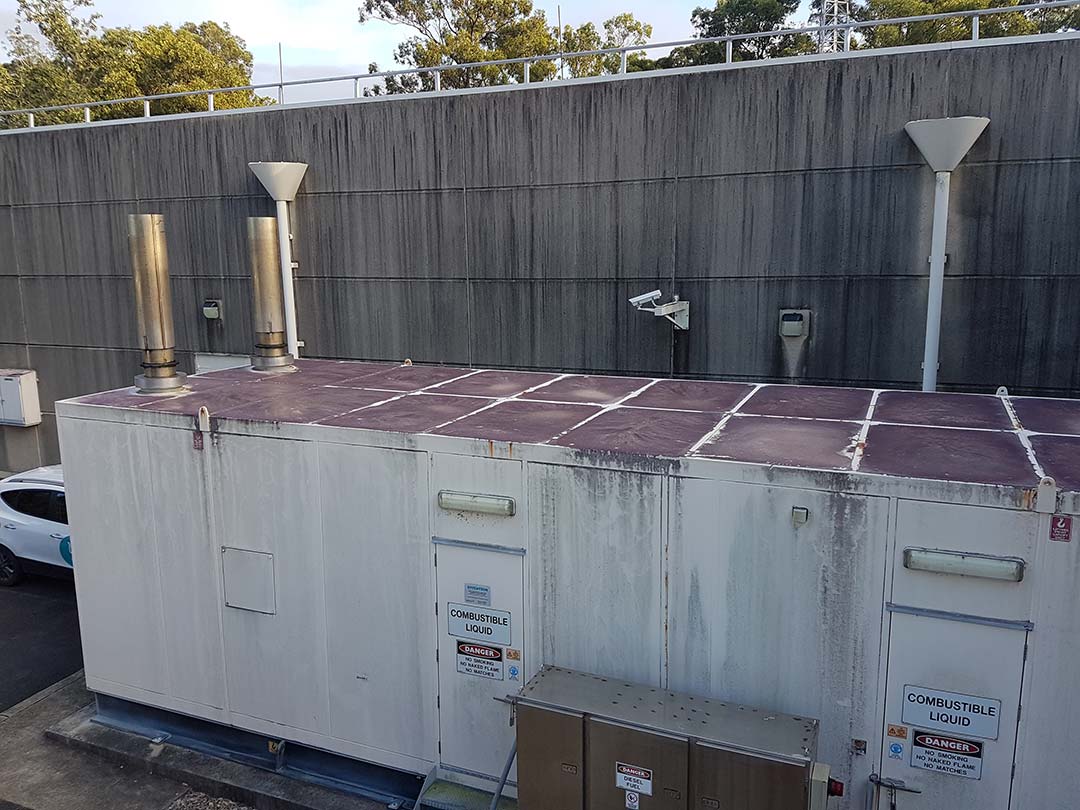
Waterproof, Restore and Heat-Protect Your Shipping Container in a Weekend.
Too hot inside in the Aussie sun?
Time to fix it ANYONE CAN DO IT.

TRUSTED BY INDUSTRY LEADERS:


Coverage Reference Guide
Shipping container waterproofing is mostly seam and detail work — not full-surface painting. Use this guide to match your situation to the right quantity.
Seams, joins & spot rust treatment
Most small shipping containers only need seams, corner joins, and isolated rust spots treated — not the full roof surface. 4L is sufficient for this type of targeted application on the majority of standard containers.
or 15L
Larger containers or extensive seam & rust work
High-cube containers, 40ft containers, or any container with heavy rust pitting, multiple seam repairs, and full corrosion treatment across the roof will need 8–15L. Use the calculator above to guide your estimate, then round up if in doubt.
coverage
Only recommended for severe surface damage
Full-surface coating is only necessary when the roof has extensive rust-through, holes, or widespread surface damage — not routine maintenance. If unsure, start with seam treatment and assess before committing to full coverage.
SHIPPING CONTAINER KIT BUILDER
How Big is Your Container?
Enter your Shipping Containers area, pick a colour and you're done.
Minimum 0.1 m². Use comma or dot for decimals. Arrow keys adjust by 0.1. Hold +/− to repeat.


Step 1: Clean and Prepare the Surface
Use a leaf blower to remove excess water and ensure the surface is completely dry before application.

Step 2: Reinforce Seams, Joins, and Holes
Apply a first coat of Liquid Rubber Waterproof Sealant with a brush to these areas.
While the sealant is still wet, embed the Geo-Textile into the sealant, making sure to smooth out air bubbles and wrinkles.
Once positioned, spray Rapid Cure Spray to set the product and speed up drying.

Step 3: Apply Waterproof Sealant to Entire Surface
If rain is expected, spray Rapid Cure Spray after application to set the product quickly.

Step 4: Apply Sealer/Primer
If the container was previously painted, apply Sealer before adding the final coating.
If working with raw metal, apply Etch Primer to ensure proper adhesion.

Step 5: Apply the Protective Thermal Coating
Apply 3 coats over Waterproof Sealant or 2 coats minimum over primed metal surfaces.
Area Calculator
Calculate the total area of your Shipping Container then Enter the Result into the Kit Builder below.
Full Container (Top+Sides)

Only Top

Advanced Heat-Reflective Protection
Liquid Rubber thermal coating is engineered for Shipping Containers. Reflects heat, blocks UV rays, reduces inside temperatures, and keeps your Container cooler in every season.

Reduce heat, save on energy, and extend the life of your Shipping Container.
- Reflects up to 90% of infrared heat, for a noticeably cooler Shipping Container interior. Even on the hottest days.
- Extends caravan roof lifespan, by protecting against harsh sun, rain, and dust.
- Advanced membrane system, for superior insulation and waterproofing.
Liquid Rubber DIY vs. Traditional Roof Sealants
Compare Liquid Rubber DIY with conventional coatings and sealants.
| Feature | Traditional Sealants | Liquid Rubber DIY Kit |
|---|---|---|
| Waterproofing | Prone to leaks, leaves gaps and cracks. | Fully watertight. Seals your whole surface. |
| Flexibility & Durability | Cracks or peels in heat and cold. | Remains flexible. Never cracks or peels. |
| DIY Friendly | Often tricky to use | Brush or roll on. Easy to apply |
| UV & Weather Proof | Breaks down in sun or heavy rain. | Made for Aussie weather. Lasts for years. |
| Eco & Cost Effective | Harsh chemicals, needs frequent recoating. | Water-based, non-toxic. Saves money. |
| Adhesion & Maintenance | Doesn’t stick well, repairs common. | Sticks to any roof. Low maintenance. |
Waterproofing
Traditional
Prone to leaks, leaves gaps and cracks.
DIY Kit
Fully watertight. Seals your whole surface.
Flexibility & Durability
Traditional
Cracks or peels in heat and cold.
DIY Kit
Remains flexible. Never cracks or peels.
DIY Friendly
Traditional
Often tricky to use
DIY Kit
Brush or roll on. Easy to apply
UV & Weather Proof
Traditional
Breaks down in sun or heavy rain.
DIY Kit
Made for Aussie weather. Lasts for years.
Eco & Cost Effective
Traditional
Harsh chemicals, needs frequent recoating.
DIY Kit
Water-based, non-toxic. Saves money.
Adhesion & Maintenance
Traditional
Doesn’t stick well, repairs common.
DIY Kit
Sticks to any roof. Low maintenance.

FREQUENTLY ASKED QUESTIONS
Can I apply Liquid Rubber waterproof sealant over existing coatings or sealants?
For the best waterproofing results, apply Liquid Rubber to a clean and dry surface. Remove old roof coatings, silicone, or loose materials before starting. This ensures maximum adhesion and long-term leak protection.
What tools and equipment do I need to waterproof my Shipping Container?
Applying Liquid Rubber DIY waterproofing is simple. You only need a paintbrush or roller (included in our kits). Basic safety gear such as gloves is recommended, and keep a cleaning agent handy for spills or cleaning your tools.
How many coats of Liquid Rubber or primer should I apply for my Shipping Container waterproofing?
To ensure your Shipping Container stays fully waterproof, apply 2-3 coats of Liquid Rubber sealant directly to the clean and dry surface. Then apply one coat of primer over the rubber and the remaining roof area, followed by 3 coats of thermal coating over the waterproofed area and 2 coats over the remaining roof area for the best UV protection and heat reflection. The product amounts in our kit builder are calculated to be sufficient for up to 3 coats.
What is the recommended curing time for each coating?
Allow the waterproof sealant to cure for 4-12 hours between coats and be fully cured within 72 hours for a strong, weatherproof bond. The primer cures in 2-4 hours before the thermal coating can be applied. For the thermal coating, wait 6-12 hours between coats. When in doubt, 1 coat a day keeps problems away.
Can I apply Liquid Rubber waterproofing in different weather conditions?
For best results, apply Liquid Rubber when the weather is dry and mild. Avoid application if rain, dew, or strong wind is expected within 24 hours. This helps your new house boat roof coating cure properly and prevents moisture from interfering with adhesion.
How long does shipping take for Liquid Rubber DIY kits in Australia?
We offer fast shipping Australia-wide. Orders typically arrive within 3 to 8 business days. Local pickup is also available at 1 Conway Court, Nerang, Gold Coast, QLD 4211.
What colour is the Waterproof Sealant?
The Waterproof Sealant appears brown when wet but turns black when fully cured. If you want a coloured finish, we recommend applying a primer on top of the cured sealant, followed by a top coat in your chosen colour. This approach ensures both waterproofing protection and creates enhanced UV resistance and provides longevity.

DOCUMENTATION & MAINTENANCE
DOWNLOAD TECHNICAL DOCUMENTS
Get everything you need: Technical data sheets, and safety information for all products included in your kit.
Technical Data Sheets
Safety Data Sheets

Liquid Rubber DIY Waterproof Sealant
Liquid Rubber DIY Waterproof Sealant
Liquid Rubber DIY Waterproof Sealant

Thermal Coating
Thermal Coating
Thermal Coating

Etch Primer - Metal Surfaces
Etch Primer - Metal Surfaces
Etch Primer - Metal Surfaces

Sealer / Primer
Sealer / Primer
Sealer / Primer

Rapid Cure Spray
Rapid Cure Spray
Rapid Cure Spray

Geo Textile
Geo Textile
Geo Textile

