


Liquid Rubber DIY Waterproof Sealant
Liquid Rubber DIY Waterproof Sealant
-
 Easy DIY Application. No Roofer Needed.
-
 Non-Toxic, Potable, VOC-Free, Eco-Friendly.
-
 Australian Made for Harsh Sun & Rain
-
 10-Year Warranty. Free Australia-Wide Shipping.


Couldn't load pickup availability
Free Sample
Try it before you commit
Get a free 350ml sample of our Waterproof Sealant delivered to your door.
Just pay shipping.
Wondering how much you need?
Use our Coverage Calculator
You need


Need help applying this product?
Get a free installation quote from a vetted applicator in your area. Small to medium jobs, residential and light commercial.

TRUSTED BY INDUSTRY LEADERS:


How to Use Liquid Rubber Waterproof Sealant

No Primer needed! Sticks to all surfaces without Primer!
Flexible, and suitable for use on nearly any surface. Simply paint or spray on the sealant and watch as it instantly molds to whatever shape it's applied. The sealant then dries to create a flexible and seamless waterproofing barrier that's resistant to cracking and aging.
What Australian Homeowners Say
Liquid Rubber fixed my leaking roof!
I sealed several pass-throughs on my flat tin roof (skylights, chimney, ducts) with liquid rubber and the instant hardener spray. It worked great. Filled low spots with foam, covered with geo-textile, and applied more coats to create slope so water no longer pools. Roof is now protected and I wish I’d known about this product earlier. Tip: always use the rapid cure spray, even on sunny days, as overnight condensation can stop the rubber from drying properly.

Water tight
I have to say that is waterproofing system is fantastic. I have now used it to repair a rusted out box gutter full of holes and no more leaks. Not sure how long it will hold for but hey cheaper than replacing the entire roof just for the box gutter. Fully recommended. I have also fully sealed flashings all around my house and I am exited to say I feel they are now water tight.

Pond Finish
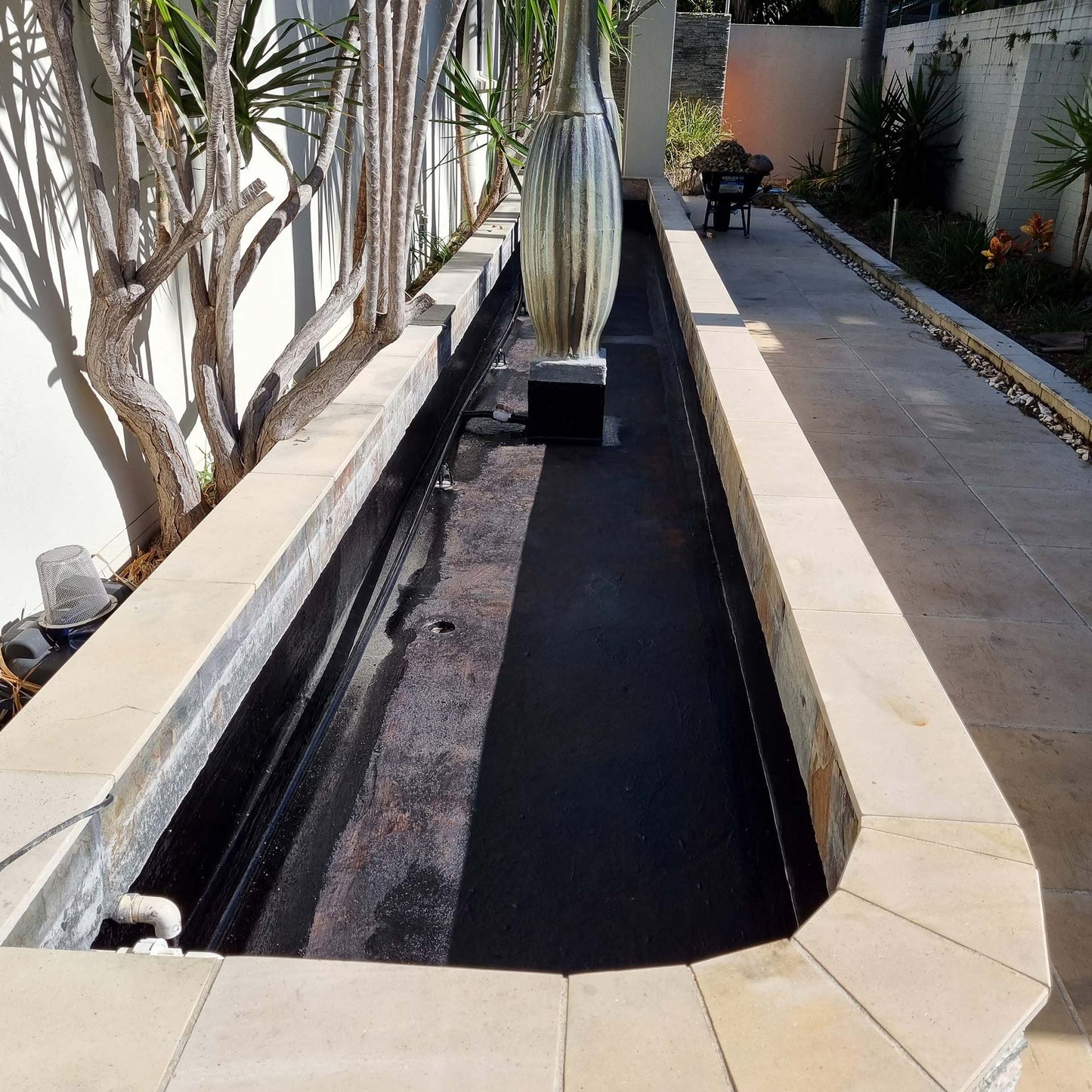
I sealed my pond with Liquid Rubber and the result is fantastic. No more leaks and it looks great. The product went on easily and gave me confidence it will hold up long term. Really happy with the finish and would definitely recommend it for ponds and water features.

Internal water tank sealant
Decided to order the Liquid Rubber DIY Waterproof Sealer to fix the smallish leaks I had on my 10000 gal concrete drinking water tank. I had 4 cracks visible inside that were previously sort of fixed by previous owner using some epoxy resin. I used Water Stop cement based filler some time ago and it was working sort of ok. I found some moist areas on the outside of the tank in proximity of the internal cracks. The tank was finally drained again and I applied 2 coats of Liquid Rubber Sealer IAW instructions. The tank is now 75% full again and I have not found any damp areas on the outside since. It looks the problem is fixed for good and only time will tell if it holds up. The shipping and communication was excellent with Liquid Rubber. Thanks for a good product and your good service and advice.

Works as advertised!
I had tried a number of solutions to fix our continuously leaking roof. It wasn’t until I applied the Liquid Rubber Waterproof Sealant that I finally found a permanent solution. Happy to put away the drip buckets!


Stop Leaks with Your Custom Kit
How big is the Area you want to Waterproof?
Minimum 0.1 m². Use comma or dot for decimals. Arrow keys adjust by 0.1. Hold +/− to repeat.


Fun Facts About Liquid Rubber

Liquid rubber technology has been around for over 50 years, with early liquid-applied membranes dating even back to the 1960s.

Liquid rubber can stretch up to 1800% without cracking, then shrink back to the same size and restore itself after movement.

NASA Connection – The Liquid Rubber Formulations is inspired by elastomeric coatings designed for aerospace and extreme environments.


Liquid Rubber DIY vs. Traditional Sealants
Compare Liquid Rubber DIY with conventional sealants.
| Feature | Traditional Sealants | Liquid Rubber DIY |
|---|---|---|
| Waterproofing | Prone to leaks, leaves gaps and cracks. | Fully watertight. Seals your whole surface. |
| Flexibility & Durability | Cracks or peels in heat and cold. | Remains flexible. Never cracks or peels. |
| DIY Friendly | Often tricky to use—may need a pro. | Brush or roll on. Anyone can do it. |
| UV & Weather Proof | Breaks down in sun or heavy rain. | Made for Aussie weather. Lasts for years. |
| Eco & Cost Effective | Harsh chemicals, needs frequent recoating. | Water-based, non-toxic. Saves money. |
| Adhesion & Maintenance | Doesn’t stick well, repairs common. | Sticks to any roof. Low maintenance. |
Waterproofing
Traditional
Prone to leaks, leaves gaps and cracks.
DIY Kit
Fully watertight. Seals your whole surface.
Flexibility & Durability
Traditional
Cracks or peels in heat and cold.
DIY Kit
Remains flexible. Never cracks or peels.
DIY Friendly
Traditional
Often tricky to use—may need a pro.
DIY Kit
Brush or roll on. Anyone can do it.
UV & Weather Proof
Traditional
Breaks down in sun or heavy rain.
DIY Kit
Made for Aussie weather. Lasts for years.
Eco & Cost Effective
Traditional
Harsh chemicals, needs frequent recoating.
DIY Kit
Water-based, non-toxic. Saves money.
Adhesion & Maintenance
Traditional
Doesn’t stick well, repairs common.
DIY Kit
Sticks to any roof. Low maintenance.

Frequently Asked Questions
Can I apply Liquid Rubber waterproof sealant over existing coatings or sealants?
Yes, Liquid Rubber can be applied over most existing coatings, but the surface must be clean, dry, and in good condition.
What tools and equipment do I need to waterproof my caravan roof?
Application is simple. Use a paintbrush, roller or a spray machine for larger roofs. Basic safety gear such as gloves is recommended, and keep a suitable cleaner handy for spills and tool cleanup.
Should I coat the entire roof with Liquid Rubber waterproof sealant?
Usually, no. In most projects you only need to seal the problem areas: rusty patches, seams and joints, around skylights and vents, laps, screws and penetrations, and any spots where water can pond. Targeting these areas stops leaks while saving time and materials. In rare cases, such as when large sections are rusted or existing coatings are failing everywhere, a full roof application can be helpful. Make sure the substrate is still structurally sound because severely rusted or weakened roofs may require repair or replacement. Where the metal is sound, a full coat helps encapsulate the rust and can extend the roof’s lifespan.
What is the best way to prepare the surface for application?
Use a power washer to clean the surface. The surface must be clean, dry, and free of loose paint, rust, and other contaminants.
Do I need to use the rapid cure spray?
The Rapid Cure Spray is only used for the Waterproof Sealant to instantly set the product and protect it from approaching rain. It is fully optional but we recommend using it for best results.
How many coats should I apply?
Apply a minimum of two coats of Liquid Rubber waterproof sealant (Amount in the Kit Builder is enough for 2 - 3 coats). For the Thermal Coating, apply also two coats minimum - three coats over the waterproof sealant for best coverage. The sealer and etch primer require only one coat.
What are the drying and curing times?
Allow each coat of Liquid Rubber waterproof sealant to cure for 12 to 24 hours before re-coating (full cure in 72h - depending on the weather).
Is Liquid Rubber suitable for my roof type?
Yes. It is suitable for common Australian roof types including corrugated iron or Colorbond, Trimdek or Spandek, Klip Lok or Snaplock, concrete, fibreglass, PVC, EPDM rubber, and TPO.
When is the best time to apply?
Apply in dry, mild weather. Avoid application if rain, dew, or strong winds are expected within 24 hours. This helps the coating cure properly and prevents moisture from affecting adhesion.
Is it safe for drinking water collection?
Yes, it is safe. The Liquid RubberWaterproof Sealant is potable water certified. Liquid Rubber DIY products are safe for rainwater collection and will not compromise water quality.
What spray machines are you using?
We spray Liquid Rubber DIY waterproof sealant with a Graco Mark V airless spray machine. For the thermal coating we use a VEVOR airless spray machine.
What colour is the Waterproof Sealant?
The Waterproof Sealant appears brown when wet but turns black when fully cured. If you want a coloured finish, we recommend applying a primer on top of the cured sealant, followed by a top coat in your chosen colour. This approach ensures both waterproofing protection and creates enhanced UV resistance and provides longevity.
How long does shipping take in Australia?
We ship Australia wide. Orders typically arrive within 3 to 8 business days. Local pickup is also available at 1 Conway Court, Nerang, Gold Coast, QLD 4211.

DOCUMENTATION & MAINTENANCE
DOWNLOAD TECHNICAL DOCUMENTS
Get everything you need: Technical data sheets, and safety information for all products included in your kit.